Turn Any Idea Into a Book
How a single sentence can become a fully illustrated, narrated book, and the simple workflow that gets you there.
Author
Share
You can turn any idea into a book by following a simple workflow: describe it in a sentence, plan the structure, draft the chapters, illustrate and narrate them, then publish. Anthra helps at every stage, from the premise interview that sharpens a vague idea to the print-ready files at the end. You stay in charge of the story the whole way, and you don't need any writing experience to start.
The hardest part of writing a book has always been the distance between the spark and the finished thing. You have a world, a character, a feeling you want to capture, but turning that into chapters can feel impossible. This is the path Anthra takes you down, one step at a time.
Step 1: Start With a Sentence
You don't need an outline or a plan. Describe your idea in plain language, such as "a detective who can taste lies" or "a bedtime story about a brave little lighthouse," and Anthra proposes a structure: chapters, characters and a tone. If you'd rather start from something you've already written, you can import a DOC, DOCX, EPUB, MOBI or PDF manuscript instead. Either way, you stay in the driver's seat, accepting, editing or redirecting at every step.
"Everyone has a book in them. The trick is finishing it."
Step 2: Sharpen the Idea
A single sentence leaves a lot open, so the premise interview asks questions to fill in what matters. Anthra can suggest a genre from your premise, pitch alternative takes on it and help you write a theme statement. You'll also choose a length in the new-book wizard. The short setting aims for about five chapters, standard for about ten and long for about sixteen, and the wizard shows the price before anything starts.
Step 3: Plan the Structure
Next comes the Plan workbench. Anthra builds a beat sheet and a character bible that records what each character wants, fears and wrongly believes, plus a conflict matrix showing who stands in whose way. It can gather mood references and era research if your story is set in a particular time and place. Then it grades the outline before you write a word, so a sagging middle shows up while it's still cheap to fix.
Step 4: Draft the Chapters
As each chapter takes shape, Anthra keeps track of your characters and plot so the story stays consistent. You can rewrite a passage, change a character's name or ask for a different tone, and the rest of the book stays in sync. Prose lint and sensitivity checks are there as you go, and the author copilot can run continuity checks or track down a dangling thread whenever you ask.
Step 5: Add Pictures and a Voice
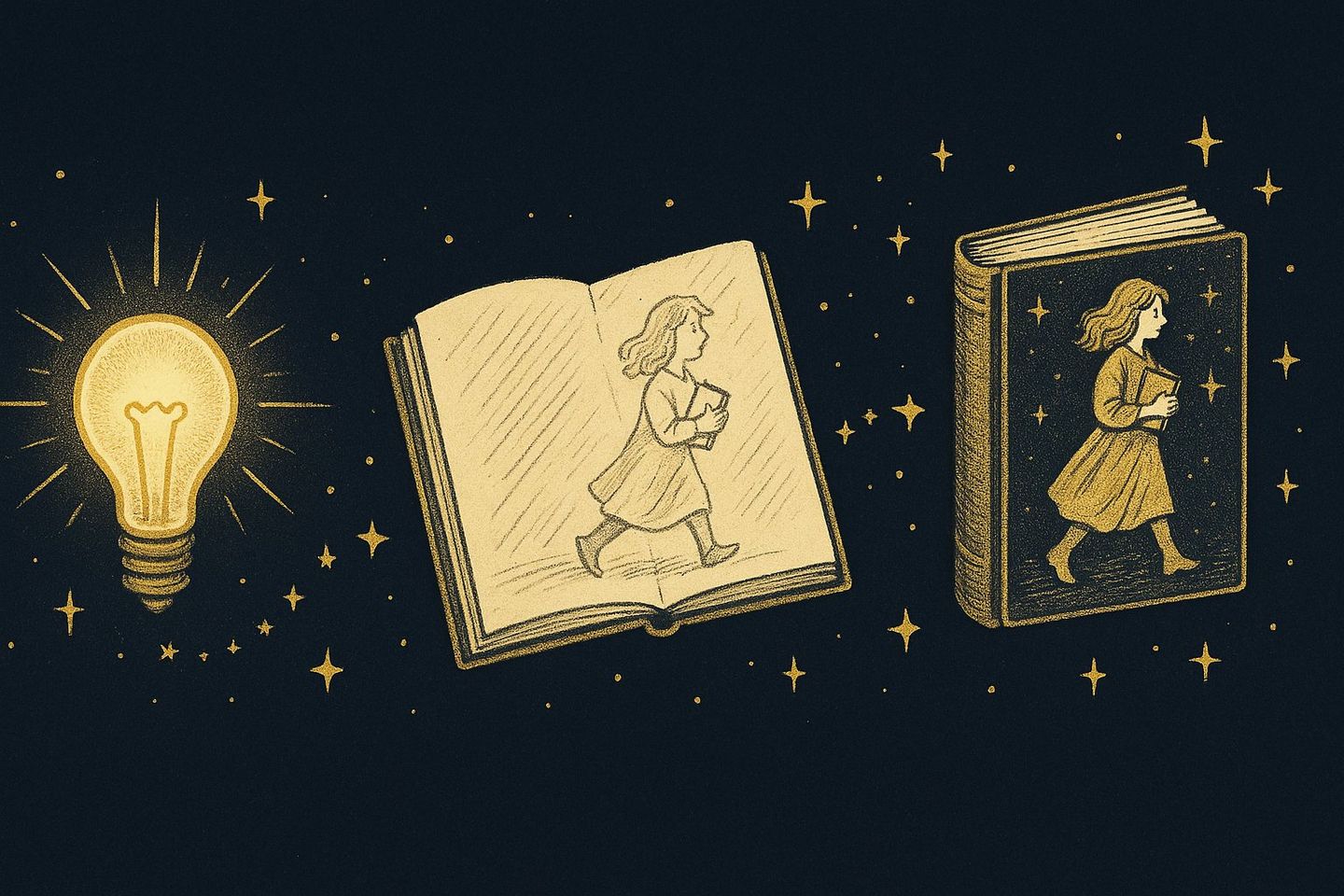
Once the words are right, Anthra brings them to life. Build the full cover, front, back and spine, and generate chapter art and character portraits locked to one consistent style. Then add lifelike narration from the voice library, with a different voice per character if you like, so your book can be heard as well as read.
Step 6: Publish, Gift or Keep It
Export EPUB, PDF and DOCX, an M4B audiobook, or a print-ready paperback through Lulu print-on-demand. Keep the book private, share it with a link, or publish it to Discover, where you can offer it free, behind an email sign-up or for sale. The result is something you can publish, gift or simply enjoy.
What Kinds of Ideas Work Best?
Almost any idea can become a book, but the ones that grow fastest have a character who wants something and a reason they can't simply have it. "A lighthouse" is a setting. "A lighthouse that's afraid of the dark" is a story. If your idea is only a setting or a mood, ask Anthra for three premises built on it and pick the one with the most tension. Picture books, novels, memoirs and non-fiction all follow the same path.
A Worked Example: From One Sentence to a Plan
Take "a bedtime story about a brave little lighthouse." That's a start, but it leaves a lot open. Who is it for? What does the lighthouse have to be brave about? What changes by the end? The premise interview is designed to draw out answers like these. Say you decide it's for children around four to six, and the lighthouse is afraid of the storm it's meant to shine through.
Now the shape becomes clear. The lighthouse loves calm nights and fears storms. A small boat is out when a storm rolls in. The lighthouse has to keep shining even though it's frightened. The boat finds its way home. The lighthouse learns that being brave doesn't mean not being scared. That's five short chapters and a beat sheet, and you haven't written a line of prose yet. From here, drafting is a matter of filling in scenes you already understand.
How Long Does It Take to Make a Book?
It depends more on your decisions than on the writing. Planning a short book can take an evening. Once you start generation, Anthra shows the step it's on, the chapter it's writing and a time estimate, and full-book runs continue in the background, so you can close the tab and come back. Illustration and narration add their own time, and your reading and editing take as long as you want them to.
Where Should You Spend Your Time?
Spend it on the decisions that ripple through the whole book. A clear premise and a solid outline save far more time than they cost. Read each chapter as it's drafted and fix problems early, while they're still contained. When editing, give extra care to the opening and the ending, which readers remember most. And for illustrated books, settle the style and lock your characters before you generate scenes, so you aren't redoing art later.
Who Is This Workflow For?
Novelists use it to go from a premise to a structured first draft, with continuity checks along the way. Parents and educators use it to make illustrated, narrated picture books. Memoirists use it to turn stories they've told for years into chapters. Poets and hobby writers use it to collect their work into a finished, shareable book. Small publishers use it to take a manuscript to print files and an audiobook. The steps are the same; what changes is how much of the writing you want to do yourself.
FAQ
Do I need to know how to write? No. Anthra drafts from an outline and beat sheet, and you can edit anything. Your judgment about what feels right is the most important skill.
How much does a book cost? New accounts start with free welcome credits. Outlining a book costs about 2 credits and writing a chapter about 5, so the writing for a short book fits within those welcome credits. Illustrations and narration are priced separately on the pricing page.
Who owns the finished book? You do. Whether you're writing your first picture book or your tenth novel, the workflow is the same: describe, plan, write, illustrate, narrate, publish. The story has always been yours. Anthra just helps you finish it.