Can You Copyright a Book Written With AI? What the Law Says in 2026
Prompts alone don't make you an author, but the parts you write, change and arrange still count. Here is what the U.S. Copyright Office and the courts have said, and how to keep your book protectable.
Author
Share
Yes, you can copyright a book you wrote with AI's help, but only the parts that come from you. In the United States, copyright protects human authorship. Text an AI produced from your prompts isn't protected on its own. The words you write, the changes you make to AI drafts, and the way you select and arrange material are protected. The more of the book that is genuinely yours, the more of it you own in the legal sense.
This guide covers what the U.S. Copyright Office and the federal courts have actually said, what that means for an author working with AI, and the habits that keep a book on the right side of the line. It is general information, not legal advice. If a book is central to your income, talk to an intellectual property lawyer.
What Did the U.S. Copyright Office Decide About AI?
In January 2025 the Copyright Office published Part 2 of its report on copyright and artificial intelligence, which deals with whether AI output can be protected. Its core conclusion is that AI-generated material is protected only where a human author has determined enough of the expressive elements. The Office also said that providing prompts, by itself, doesn't make you the author of what comes back.
The report is not hostile to AI-assisted work. It names three ways a human can still claim authorship: when your own work is perceptible in the output (for example, you wrote a passage and the AI polished it), when you make creative modifications to what the AI produced, and when you creatively select and arrange AI-generated material. It also says plainly that using AI as a tool, or including some AI material in a larger human work, doesn't stop the work as a whole from being registered.
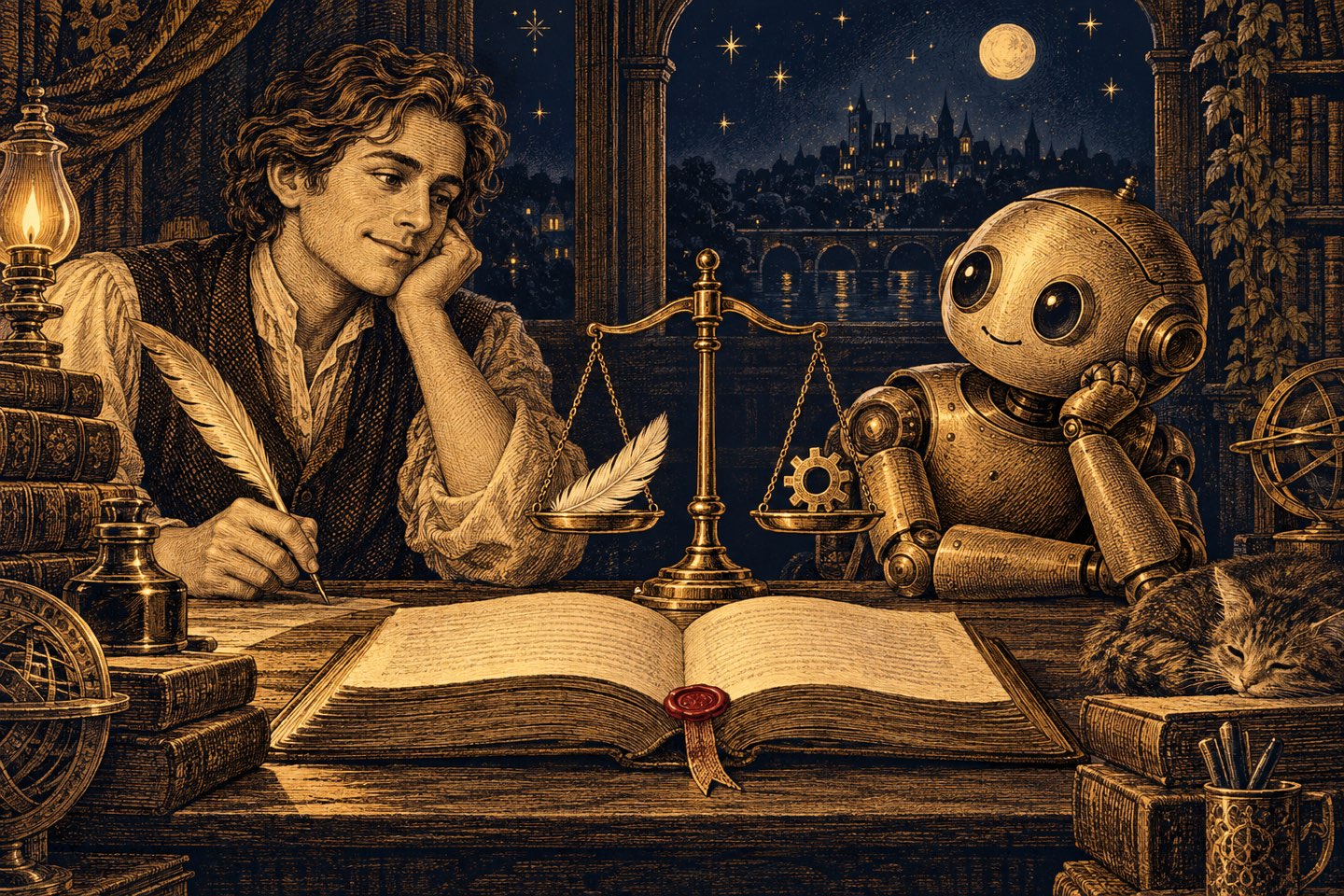
"Prompts alone don't make you an author. Your writing, your edits and your arrangement do."
What Did the Courts Say in Thaler v. Perlmutter?
Stephen Thaler tried to register an image he said was created entirely by his AI system, listing the machine as the author. The Copyright Office refused, and in March 2025 the U.S. Court of Appeals for the D.C. Circuit agreed: the Copyright Act requires a human author. In March 2026 the Supreme Court declined to hear the case, so that ruling stands.
The court was careful about what it didn't decide. Because Thaler disclaimed any human contribution, the judges didn't rule on how much human involvement is enough. They also noted that the human-authorship rule still lets people pursue rights in works they make with the assistance of AI. The case closes the door on machine authorship. It doesn't close the door on AI-assisted books.
Which Parts of an AI-Assisted Book Can You Own?
Think about your book in layers. Copyright can attach to each layer you shaped:
- Your premise, plot decisions and outline, to the extent they are expressed in the text rather than just ideas, which copyright never protects.
- Passages you wrote yourself, even if an AI later suggested edits.
- Substantial rewrites of AI drafts, where your changes carry the expression.
- The selection and arrangement of chapters, scenes and material, which can be protected even when individual pieces aren't.
- Illustrations you drew or meaningfully modified. Images generated purely from a prompt fall under the same rule as text.
How Do You Register an AI-Assisted Book?
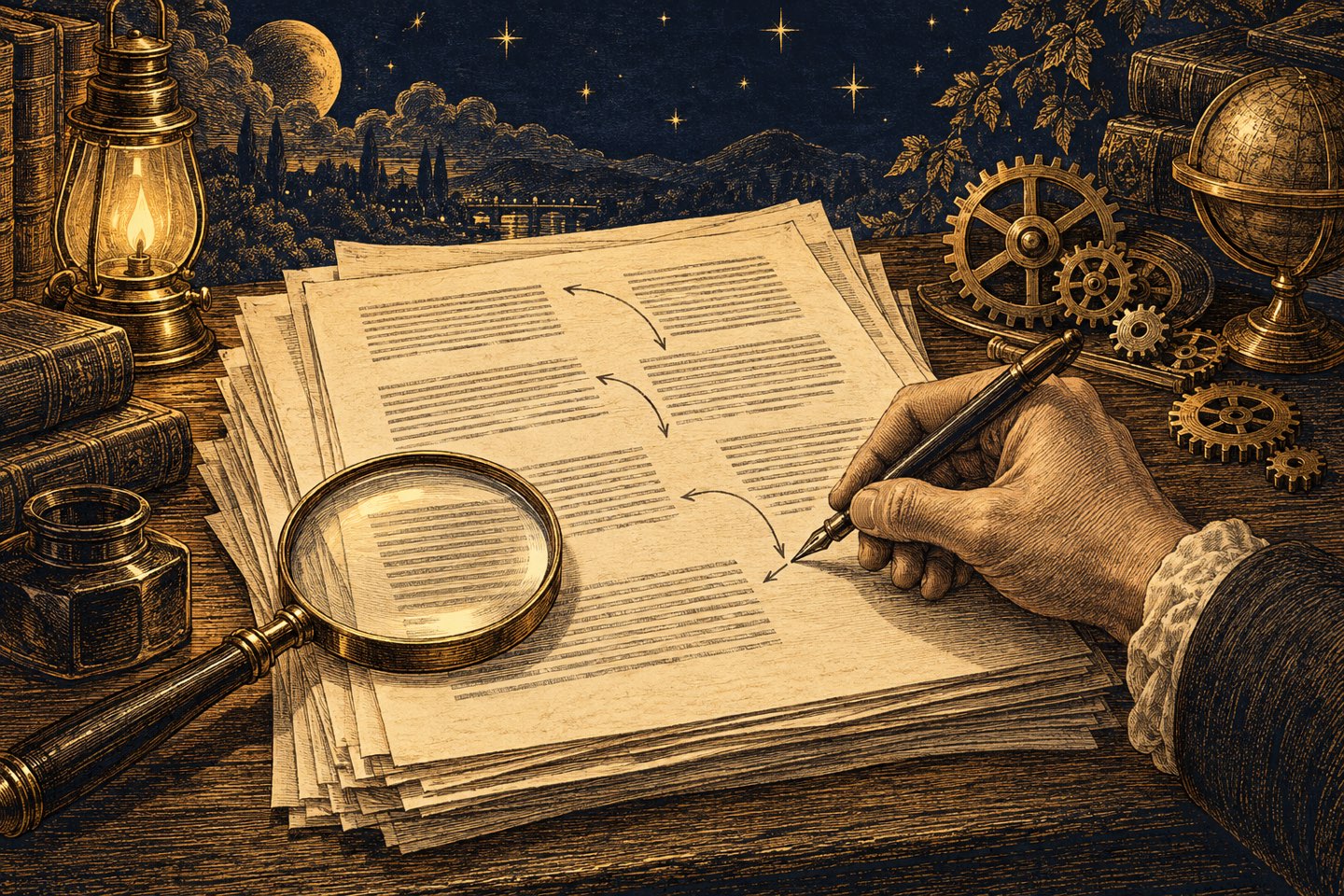
Since March 2023 the Copyright Office has required applicants to disclose AI-generated material in a work, and to explicitly exclude AI-generated content that is more than minimal from their claim. In practice that means describing the parts you wrote or substantially changed, and leaving out material that came from AI with little or no human change. If you already registered a work without disclosing AI material, the Office's guidance explains how to correct the record.
How Can You Keep Your Book Protectable?
A few working habits make a real difference, both for copyright and for the quality of the book:
- Write the parts that matter most to you yourself: openings, key scenes, the voice of your narrator.
- Treat AI drafts as raw material. Revise them line by line rather than accepting them whole.
- Keep your own outline, character notes and decisions. They show the structure is yours.
- Keep a version history so you can show what you changed and when.
- If you publish on Amazon, answer its AI questions accurately. Amazon's rules are separate from copyright law and are covered in our KDP guide.
Anthra is built around this way of working. You plan the book, the agent drafts with you, and every edit is reviewable: you can ask an editor persona for changes and accept or reject them paragraph by paragraph. Every chapter keeps a full revision history, so you always have a record of what you wrote and changed.
Sources
- Copyright Office Releases Part 2 of Artificial Intelligence Report, U.S. Copyright Office, NewsNet Issue 1060 (Jan 29, 2025)
- Copyright and Artificial Intelligence, Part 2: Copyrightability, U.S. Copyright Office (Jan 2025)
- Copyright Registration Guidance: Works Containing Material Generated by Artificial Intelligence, U.S. Copyright Office (Mar 2023)
- Thaler v. Perlmutter, No. 23-5233, U.S. Court of Appeals for the D.C. Circuit (Mar 18, 2025)
- Supreme Court Denies Certiorari in Thaler v. Perlmutter, Baker Donelson (Mar 2026)